



Reading time: 9 minutes
In recent years, the corporate learning industry has come a long way. Digital platforms, on-demand content, microlearning, gamification: the offer has never been so rich. And yet there is a problem that every HR and learning team knows well, even if it rarely gets said out loud.
Training often gets delivered. Alignment doesn't.
The team knows how to use the platform. But they don't know what changed in this week's procedure. They don't know how HQ wants the new collection, or the new menu, to be presented. They don't know what the store manager decided about Sunday shift opening. Retail team training and alignment are two different things. Both matter.
So how do you successfully deliver both?
👉 Discover how MobieTrain can change the way you train and align your people: talk to Francesca!
.
The Store Manager: The Link Between Headquarters and the Frontline
Think about it for a moment. HQ designs the strategy, sets the standards, produces training content and operational directives. The frontline receives them and executes, or doesn't. But who is it that actually translates all of this into concrete action? Who opens the shift every morning, handles emergencies, motivates the team, and makes sure that what was learned on the platform becomes something real in the relationship with the customer?
The Store Manager - or the Restaurant Manager, in food retail. That person who lives between two worlds and knows them both: they have the strategic vision of HQ and the operational awareness of the frontline. They are a bridge figure with a double competency: they can read business priorities and they know how to open a shift.
According to data collected by MobieTrain, this role burns an average of 332 hours per year on manual administrative tasks. In one out of three cases, team communication still happens via paper, pen, or WhatsApp. One in two shows signs of burnout. Only three in ten feel truly confident in their daily decisions.
This is not a talent problem. It is a structural one: no one has ever built tools designed specifically for them.
The tools that exist speak to HQ: dashboards, reports, aggregated KPIs. Or they speak to the frontline: learning apps, quizzes, content. The Store Manager, the only person who knows both the strategy and the team, who translates intentions into execution and brings alignment into the shift, has been left without a purpose-built infrastructure.
📹 See how Obicà Mozzarella Bar turned training and alignment into a real competitive advantage. Davide Di Lorenzo, Francesco Di Donna, and Antonio Zipete share their experience firsthand.
When Retail Team Training and Alignment Actually Work
In food retail, this dynamic becomes especially visible. A restaurant can have the best training content in the world: if the Restaurant Manager doesn't have the time, the tools, or the clarity to bring it into daily operations, the impact gets lost. And along with the impact, so does alignment, every store interprets directives in its own way, every shift becomes a slightly different version of the same standard.
Obicà Mozzarella Bar, an Italian restaurant brand with an international presence, faced this challenge head-on. Davide Di Lorenzo, Group CEO, describes the starting point: "Our people are the point of contact with our guests and immediately shape the customer experience. Without proper training, we risk having staff who lack quality, and that directly affects the perceived value of the brand."
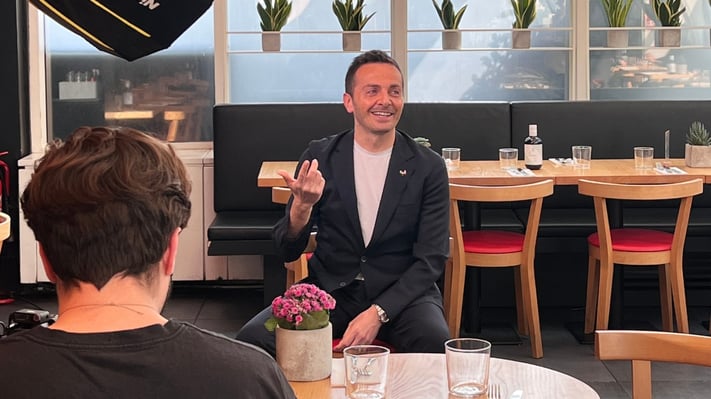 Davide Di Lorenzo, Group CEO - Obicà Mozzarella Bar
For Obicà, training and alignment were never just HR topics. They became strategic levers once the company understood their impact on revenue, customer loyalty, and reputation. Organizations like Obicà, that use the MobieTrain platform in a structured way, integrating it into daily operational processes, are exactly the kind of customers MobieTrain learns from the most. The challenges they bring, the questions they ask, and the limits they push become the engine of product development: every new feature, every improvement is born partly from listening to the people who use the platform.
👉 Want to see MobieTrain in action? Book a free demo and discover how it works for your industry!
.
From Content to Context: How the Store Manager's Role is changing
The difference is made by the person who brings training and alignment into the shift.
Francesco Di Donna, Restaurant General Manager at Obicà, describes how his work changed with Obicademy: "I can align the team quickly on new products, procedures, or standards, even remotely and in a short amount of time. This allows me to always have an up-to-date team without adding weight to daily operations."
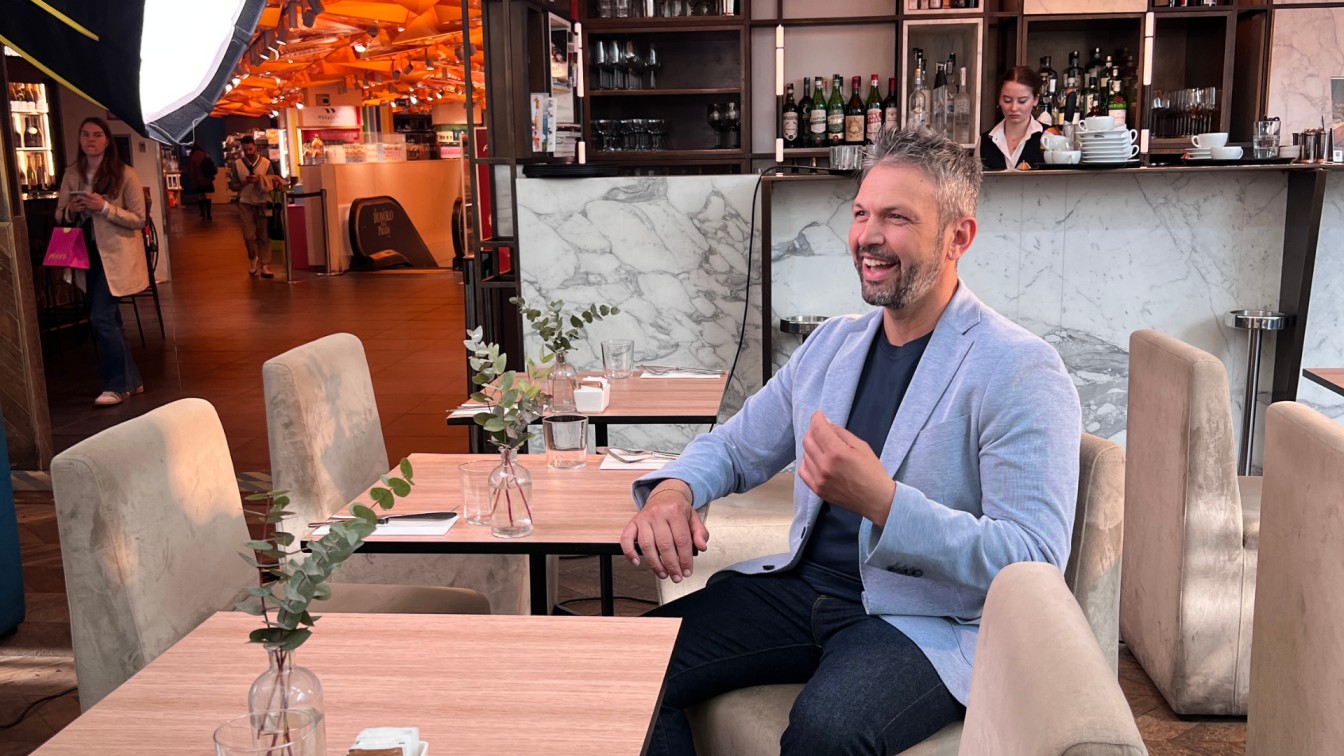
Francesco Di Donna, Restaurant General Manager - Obicà Duomo
It's not just about efficiency. It's about trust and energy on the floor: "When the team is trained and confident, the whole atmosphere changes. You work with more calm, more collaboration, more attention to detail. Even the relationship with guests becomes more genuine, because they sense competence and passion."
This is exactly the kind of impact that learning professionals know is hard to measure, but impossible to miss when it's there.
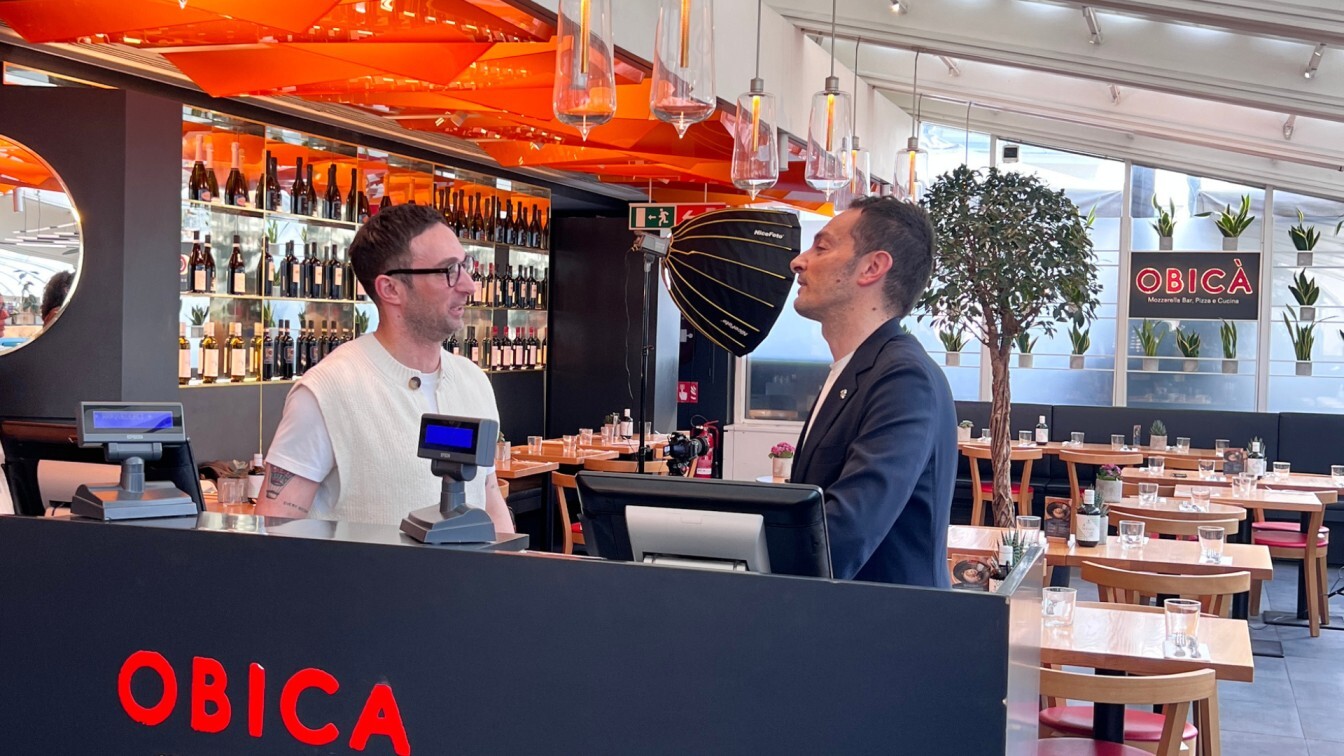
Antonio Zipete, Head of People - Obicà Mozzarella Bar, and Davide Di Lorenzo, Group CEO
Antonio Zipete, Head of People at Obicà, puts it clearly: "Training only has value if it changes something outside the screen where people learn."
Not logins, not completed quizzes, but real impact: service quality, fewer mistakes, behaviors on the shop floor. Alignment, in other words.
"An operations manual can explain what to do. Obicademy works on how to do it well and why it should be done a certain way. Through short content, concrete examples, and real-life situations, we are able to transfer behaviors, attitudes, and mindset — making our people the protagonists."
Antonio goes further, confirming Obicademy's role in building a sense of belonging: "With Obicademy we have built a shared language across different restaurants, different shifts, and people with different backgrounds. The fact that everyone can access the same learning experience creates a sense of belonging: everyone is part of the same journey, regardless of where they work."
Connecting HQ, Store Managers, and the Frontline: The Challenge MobieTrain Is Taking On
This is where MobieTrain's direction as a company comes into play: building the missing infrastructure between HQ and the frontline, designed around Store Managers, or Restaurant Managers, as central figures.
Training the frontline is not enough if the manager who should consolidate that learning and ensure alignment on the ground has no tools to do so. It's not enough for HQ to produce content and directives if there's no visibility into what's actually happening in the store or the restaurant.
The challenge is to build a flow that doesn't break: information reaches the manager, the manager acts and communicates, the team receives and executes, HQ sees the real impact. A chain that today, in most retail organizations, exists only on paper.
For those responsible for retail team training and alignment, the goal is to ensure that content and directives produce consistent behaviors across every store.
As Davide Di Lorenzo puts it: "We need to adapt to modern technologies and use a more immediate, effective language with people who are entering the workforce. Hands-on practice remains the most important training, but communicating through intuitive, targeted channels has become essential."
Want to find out whether MobieTrain is the right fit for your organization? Get in touch with Francesca: she will guide you through the process and help you find the solution that best fits your needs.