



Growth is exciting, until it begins to test the very culture that made your company successful in the first place.
For Salsa Shop, a rapidly expanding Mexican fast-casual restaurant chain in the Netherlands, that moment came as the organisation scaled across the country.
With 18 locations today, the challenge was no longer whether they could grow. It was how to grow without losing consistency, operational standards and culture along the way.
“When you are small, training happens naturally. As you grow, you realise the problem is not quality, the problem is scale.”
says Alex Jerejian, Chief Operating Officer at Salsa Shop.
In the early years, onboarding was personal. Culture, standards and expectations were explained face to face. Knowledge was transferred directly from experienced team members to new hires.
As the organisation expanded across multiple locations, that approach became increasingly difficult to maintain consistently.
Training materials were largely manual. Updates required reprinting and redistribution. Even small operational changes could take weeks to reflect everywhere. In practice, outdated versions often remained in circulation.
As information moved through layers of management, interpretation varied.
“There is always something lost in translation.One manager explains it one way, another explains it differently.
That creates noise.”
- Alex Jerejian
For a brand built on operational precision, that inconsistency posed a strategic risk.
Identifying The Missing Link
Operationally, Salsa Shop was already highly systemised. Scheduling, reporting and internal processes were automated and integrated.
Training was the missing link. “If we wanted to grow without losing our culture and standards, training had to become digital, centralised and scalable,” says Jerejian.
The objective was not simply to modernise training. It was to establish one clear source of truth that could reach every team member directly, without distortion and without increasing pressure on managers.
After evaluating several platforms, Salsa Shop chose MobieTrain as its digital training partner. The decision was based not only on functionality, but also on alignment and collaboration.
“For me, the platform is secondary. The people behind it matter most. It has to be a partnership.”
says Jerejian.
Rethinking how training works
The transition to MobieTrain was not about digitising existing manuals. It required rethinking how knowledge is delivered.
“People do not read manuals, they watch videos.”
Jerejian states.
Instead of relying on text-heavy documentation or one-time classroom sessions, Salsa Shop invested in short, practical video content. Procedures became visual. Knowledge became searchable and accessible at any time.
Training evolved from a one-off onboarding moment into a continuous reference tool.
Employees no longer depended solely on managers to repeat instructions. Information was available on demand, in a format aligned with modern consumption habits.
From Fragmented Knowledge To Uniform Execution
One of the most significant outcomes of implementing MobieTrain has been consistency.
Previously, knowledge travelled through multiple layers of management. Even with the best intentions, variation was inevitable. Today, information is delivered in the same tone and structure across every location.
“The noise is gone. There is one message, one tone, one truth.”
says Alex Jerejian.
The impact has been tangible:
• Higher and more consistent knowledge levels
• More uniform execution across restaurants
• Less repetitive training for managers
• Greater operational clarity
Engagement among frontline teams has remained high, reinforcing that the digital format resonates with employees.
Supporting Internal Growth
Salsa Shop has a clear philosophy when it comes to leadership development. Managers are developed internally. Every store manager and regional manager began as a team member.
MobieTrain now supports that pathway.
Employees can proactively complete training modules for future roles. This makes progression visible and accessible, even for those who may not actively advocate for themselves.
The result is a more transparent development structure and a stronger internal talent pipeline.
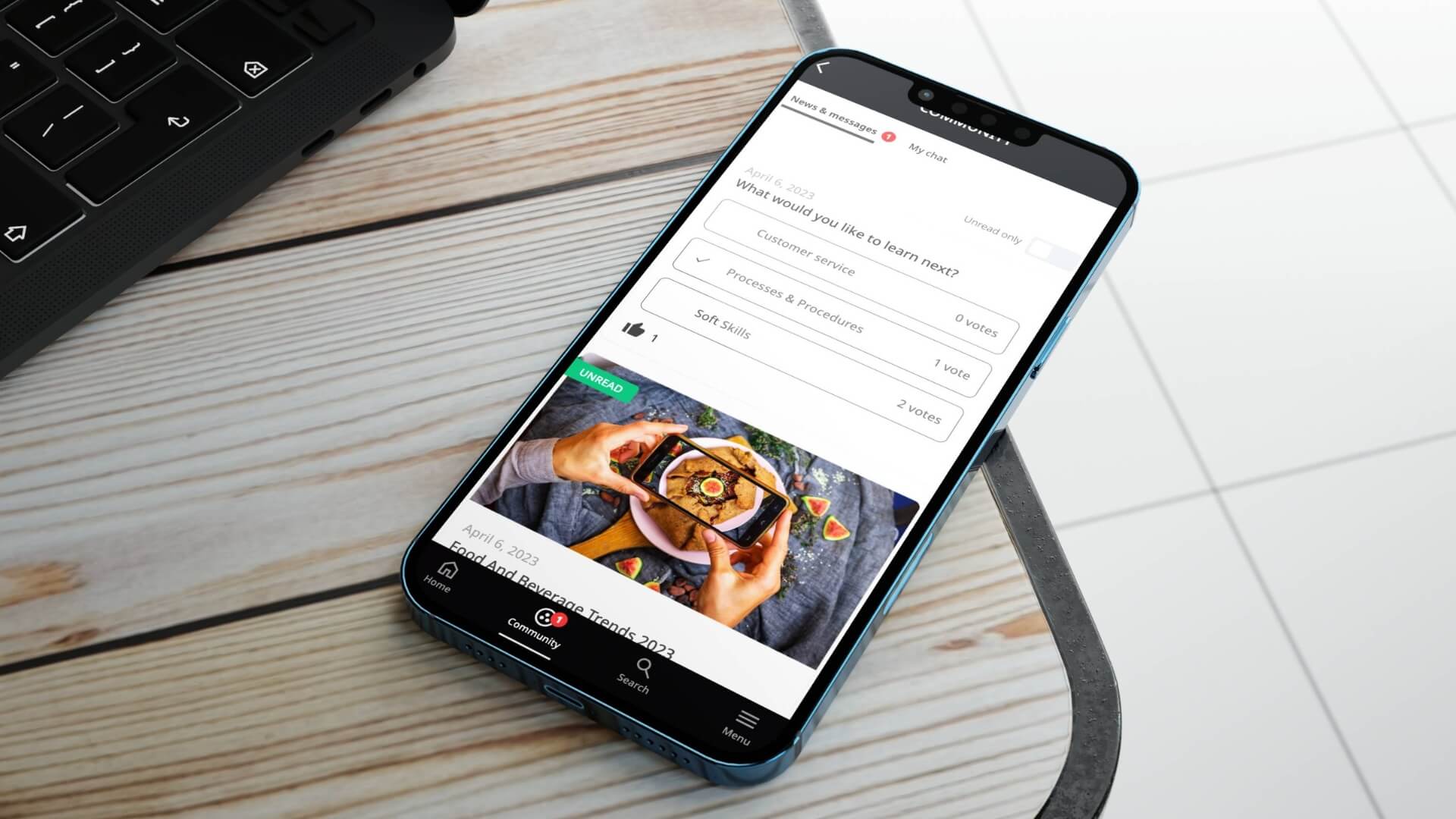
Scaling sustainably with MobieTrain
Jerejian is careful to emphasise that digital training is not a shortcut.
“MobieTrain is a tool, and like any tool,
it depends on how you use it.”
Successful implementation required commitment.
Content had to be created. The rollout was phased. Training completion is taken seriously within the organisation, and leadership actively engages with the platform.
Digital training delivers long-term value when it becomes embedded in the operational strategy.
For Salsa Shop, choosing MobieTrain did not instantly increase revenue or reduce costs.
What it provided was more fundamental:
• A centralised source of truth
• Scalable onboarding
• Consistent standards across locations
• Increased knowledge depth
• Clear internal development pathways
In hospitality, culture and consistency directly shape customer experience.
“Happy employees deliver better hospitality,”
Jerejian concludes.
By professionalising training and partnering with MobieTrain, Salsa Shop strengthened the foundation that supports sustainable growth. Not by changing who they are, but by ensuring that every team member receives the same standards, the same message and the same opportunity to grow.
See how MobieTrain can help: request a free DEMO.

Head of Marketing